

Investors reacted sharply to Intel’s latest financial disclosures, sending shares tumbling nearly 29 percent following a fiscal third-quarter report that painted a complicated picture of the company’s future. While adjusted earnings actually beat analyst expectations, the market focused instead on a sobering outlook for the final months of 2026. Management forecasted fourth-quarter revenue between 15 billion and 16 billion dollars, a dip from the previous quarter driven largely by a persistent slump in the personal computer market.

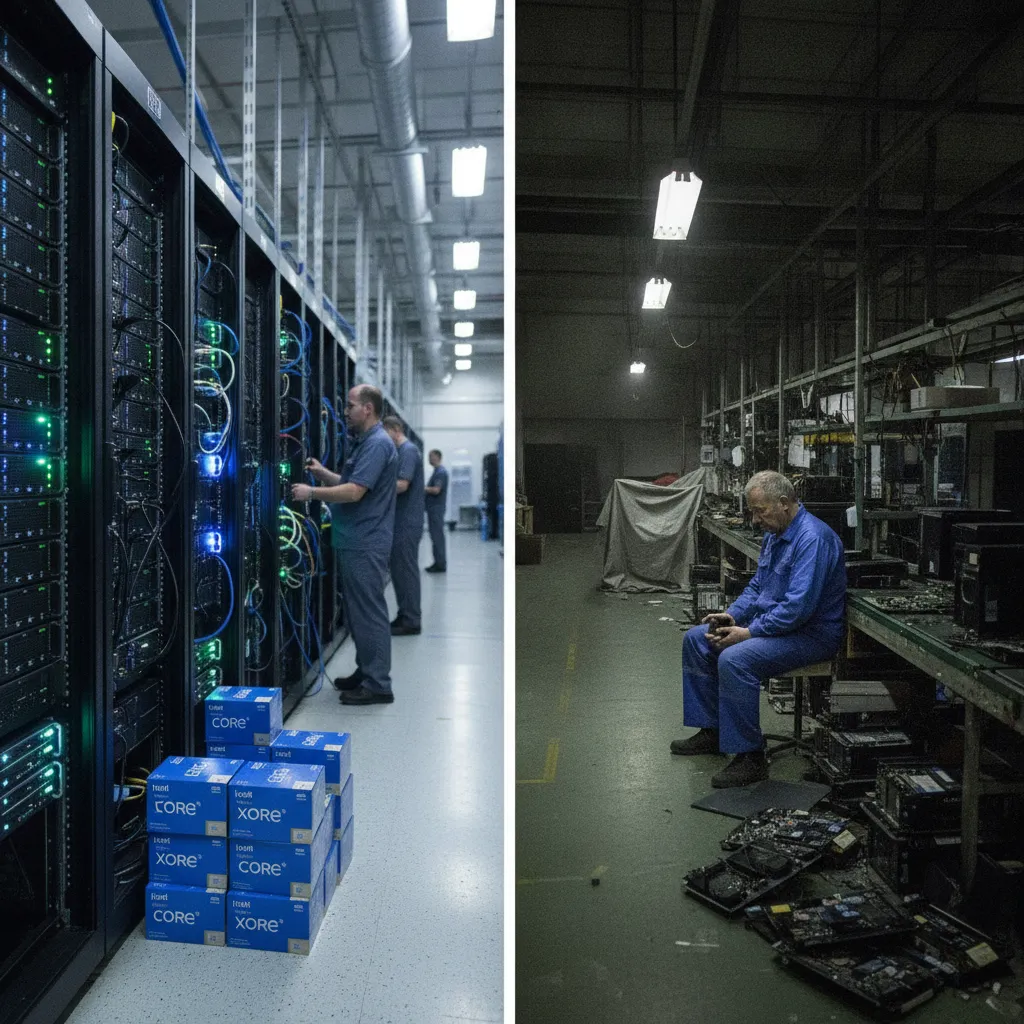
The primary tension within Intel right now is a tug of war between two very different business segments. On one side, the data center division is experiencing explosive growth, with revenues jumping nearly 80 percent year over year to reach 7.3 billion dollars. However, this success is being throttled by supply chain issues rather than a lack of interest. A shortage of critical packaging materials is limiting output and is expected to hinder shipments well into 2028, meaning Intel cannot fully capitalize on the current hunger for server chips.
Conversely, the PC chip business continues to bleed value as manufacturers struggle with excess inventory and tight corporate IT budgets. Revenues in this sector fell 9 percent recently, and leadership warns that another steep drop could occur in the coming quarter. Although there are bright spots, such as a significant rise in AI PC chip sales and progress on the upcoming Nova Lake architecture, these gains haven’t been enough to stop the overall slide toward what looks like a prolonged downturn lasting through early 2027.
Adding to the volatility are internal headwinds and heavy spending requirements. An incident at the Fab 28 plant is expected to cost the company hundreds of millions of dollars over several quarters. Meanwhile, massive capital expenditures needed to ramp up new production nodes mean that positive free cash flow remains elusive for at least another year. With billions in debt hanging over them, shareholders are essentially betting that the momentum in data centers can sustain the company until the PC market finally stabilizes.